


Subtotal ₹0.00



Ear imbalance, dizziness and vertigo are problems that can significantly affect a person’s daily life. Some people experience a spinning sensation, difficulty maintaining balance while walking, nausea, ringing in the ears, or a feeling of fullness inside the ear.
Many people continue to experience recurrent symptoms even after taking medication for a long period. However, vertigo does not have a single cause. Identifying the underlying cause is therefore one of the most important steps in managing the condition.
What is vertigo?
Vertigo is a sensation in which you feel that you or the surroundings are spinning or moving even though there is no actual movement.
Our sense of balance depends on signals from several systems, including the eyes, brain, muscles and sensory receptors, and especially the vestibular system in the inner ear. When one or more of these systems is affected, a person may experience dizziness, imbalance or vertigo
Connection Between the Inner Ear and Ear and Vertigo ?
The vestibular system, located in the inner ear, plays an important role in detecting movement and maintaining balance. It continuously sends information to the brain about the position and movement of the head and body.
Several inner-ear conditions can cause vertigo, including:
BPPV (Benign Paroxysmal Positional Vertigo)– brief but intense episodes of vertigo triggered by specific head movements.
Labyrinthitis – infection or inflammation affecting the inner ear.
Vestibular neuritis – inflammation affecting the vestibular nerve.
Ménière’s disease – an inner-ear disorder that can cause vertigo, tinnitus, hearing loss and a feeling of fullness in the ear.
Therefore, it is important not to assume that every person experiencing vertigo has the same underlying condition.
Can Allergy, Infection or Weather Changes Be Related?
In some individuals, allergies or respiratory infections may occur alongside ear-related or balance symptoms. Changes in weather may also influence certain conditions, such as migraine or other causes of dizziness.
However, claims that the body directly absorbs enough water through the skin during bathing or rain exposure to cause vertigo are not established as the scientific explanation for vertigo.
In some individuals, allergies or respiratory infections may occur alongside ear-related or balance symptoms. Changes in weather may also influence certain conditions, such as migraine or other causes of dizziness.
However, claims that the body directly absorbs enough water through the skin during bathing or rain exposure to cause vertigo are not established as the scientific explanation for vertigo.
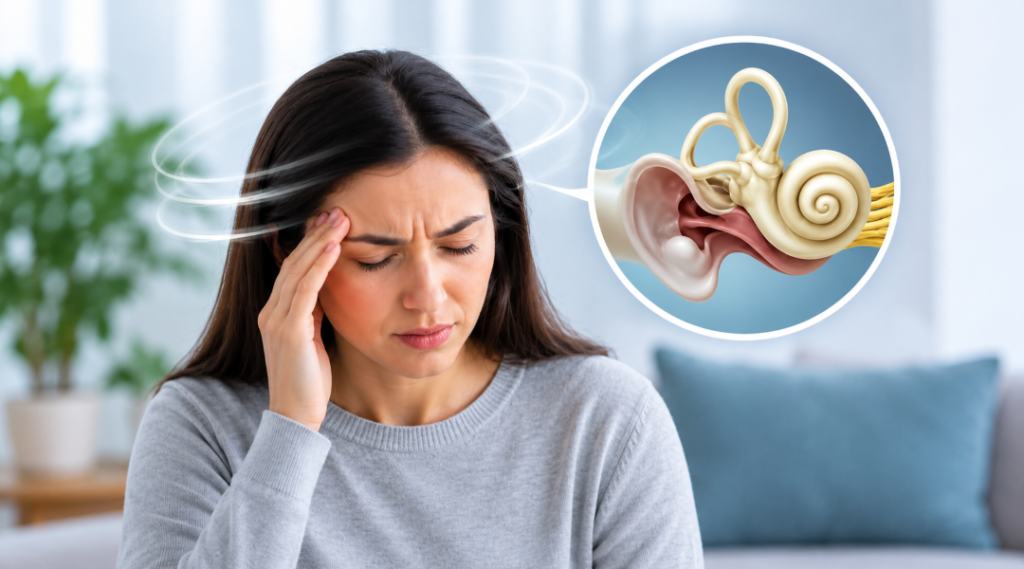
Common Symptoms of Vertigo and Balance Disorders ?
Depending on the underlying condition, a person may experience:
* A spinning sensation
* Loss of balance
* Difficulty walking steadily
* Nausea or vomiting
* Ringing or buzzing in the ears (tinnitus)
* Hearing changes or hearing loss
* A feeling of fullness or pressure in the ear
* Increased risk of falling
Symptoms can vary considerably from one person to another.
What is causing the vertigo in this particular person?
Treatment depends on the diagnosis.
For example, BPPV may respond to specific repositioning manoeuvres. Certain inner-ear conditions may require medication or other medical management. People with persistent balance problems may benefit from vestibular rehabilitation under appropriate professional supervision.
This is why simply taking anti-vertigo medication repeatedly without identifying the underlying problem may not address the actual cause.
When Should You See a Doctor?
If vertigo is persistent, recurrent, or interfering with your daily activities, medical evaluation is recommended.
Seek urgent medical attention if vertigo occurs together with symptoms such as:
* Severe headache
* Double vision or loss of vision
* Difficulty speaking
* Weakness or numbness of the face, arm or leg
* Sudden hearing loss
* Severe vomiting or other concerning symptomsThese symptoms can sometimes indicate conditions that require prompt assessment.
Common Causes of Ear imbalance &vertigo ?
Inner Ear (Vestibular) Causes:
BPPV: Loose calcium crystals in the inner ear canals trigger brief, intense spinning with head movement (the most common cause).
Meniere’s Disease: Fluid buildup in the inner ear causing vertigo, hearing loss, and ringing (tinnitus).
Labyrinthitis / Neuritis: Viral inflammation of the inner ear or vestibular nerve, causing sudden, severe dizziness.
Neurological & Brain Causes:
Vestibular Migraine: Dizziness or vertigo linked to migraine pathways, sometimes without a headache.
Central Vertigo: Issues in the brainstem or cerebellum (such as stroke or multiple sclerosis).
Other Contributing Factors:
Cervical Vertigo: Neck stiffness or injury disrupting balance signals.
Systemic Issues: Sudden blood pressure drops, dehydration, medication side effects, or poor circulation.

Ayurvedic Approach to ear imbalance and vertigo
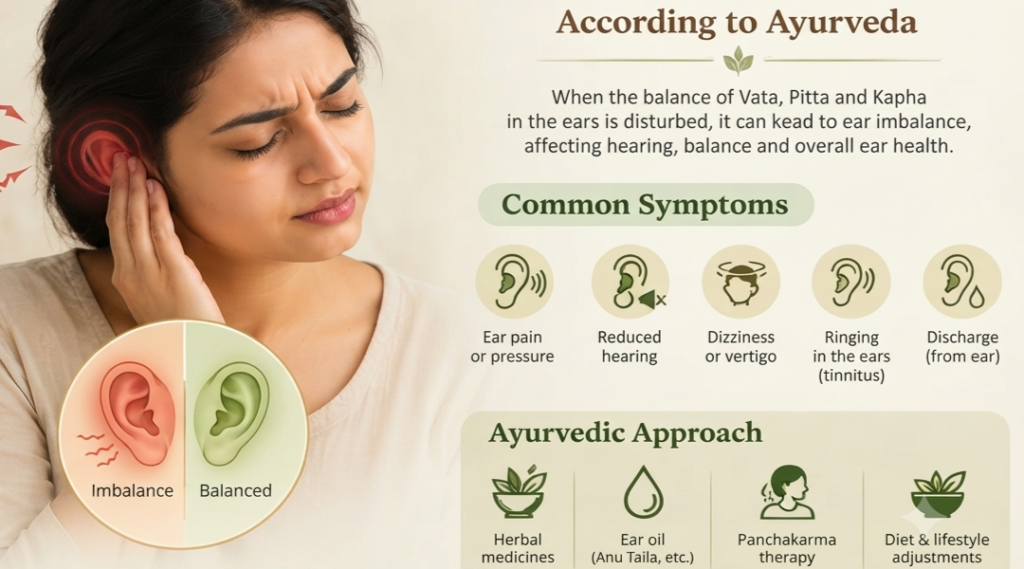
Ayurvedic texts refer to symptoms of dizziness and spinning as Bhrama. It is primarily understood as a disorder of Vata Dosha.
Vata Aggravation: Vata governs movement, space, and the nervous system. When aggravated (due to stress, improper diet, or aging), it disrupts the delicate channels of the inner ear (Srothas), affecting balance and spatial orientation.
Pitta Involvement: Occasionally, vertigo may have a Pitta component, characterized by symptoms like nausea, a hot sensation, or migraines.
Ama (Toxins): Poor digestion can lead to the accumulation of toxins (Ama), which can obstruct the channels and contribute to dizziness.
Conclusion
Ear imbalance and vertigo are not caused by one single condition. Problems involving the inner ear, vestibular nerve, migraine, medications, neurological conditions and other health issues can all contribute to dizziness or vertigo.
Therefore, rather than focusing only on temporary symptom relief, it is important to identify the underlying cause and obtain an appropriate diagnosis.
If you are experiencing recurrent vertigo, ear imbalance, tinnitus, hearing difficulties or problems with balance, consider seeking an appropriate medical evaluation. For those seeking specialized care, finding the best treatment in Kochi involves a combination of advanced neurological/ENT diagnostics (such as specialized vertigo and balance clinics available at major centers like Aster Medcity) and holistic management approaches.
From an integrative and traditional perspective, structured therapies in Ayurveda—such as specialized treatments aimed at calming Vata and Pitta imbalances (including Shirodhara, Nasya, and ear-nourishing therapies like Karnapoorana)—are also widely sought out at established regional centers in Kerala.
Always consult with a qualified neurologist, ENT specialist, or experienced integrative physician in Kochi to ensure your symptoms receive a precise diagnosis and a safe, comprehensive care plan.