


Subtotal ₹0.00


Many people who have experienced a heart attack, undergone angioplasty or suffered an ischemic stroke are prescribed aspirin as part of their long-term treatment. In selected patients, aspirin may also be prescribed to reduce the risk of future cardiovascular events.
But an important question remains:
Does taking aspirin alone mean that you are completely protected from a heart attack or stroke?
To understand this, we first need to understand how arterial blockage and blood clots actually develop.

What Does Aspirin Do?
Aspirin is an antiplatelet medication. Although it is commonly called a “blood thinner,” it does not literally make the blood thinner or more watery.
Its main action is to reduce the ability of platelets to stick together and form blood clots.
This is particularly important when a clot forms inside a narrowed or damaged artery. By reducing platelet aggregation, aspirin can help lower the risk of certain heart attacks and ischemic strokes in appropriate patients.
How Does a Heart Blockage Develop?
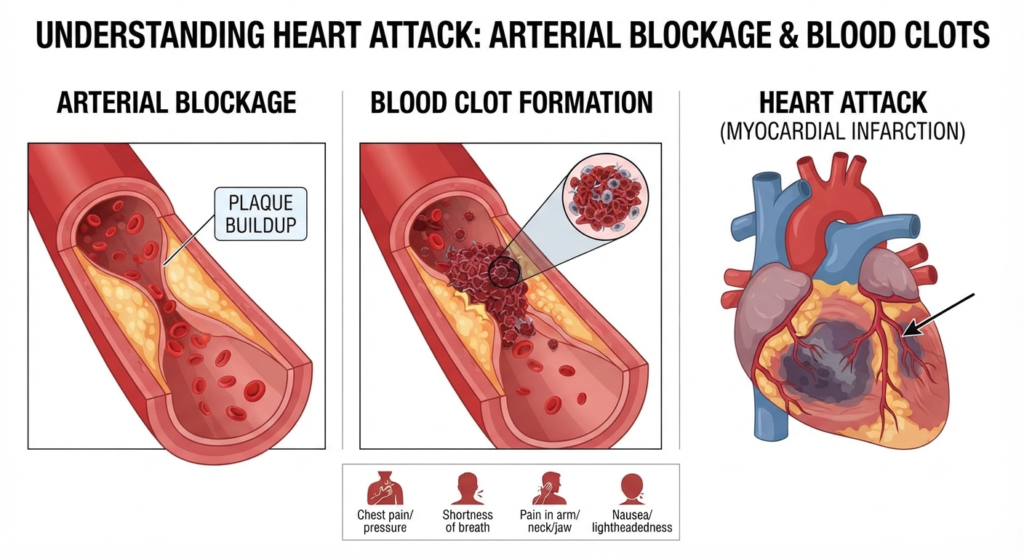
A blockage in the coronary arteries does not usually occur simply because the blood suddenly becomes thick and clots.
One of the major underlying causes is atherosclerosis.
Over time, cholesterol, fatty substances, inflammatory cells and other materials can accumulate within the walls of arteries and form what is called a plaque.
As the plaque grows, it can gradually narrow the artery and reduce the space available for blood flow.
Some plaques remain relatively stable, while others can become unstable. If an unstable plaque ruptures or becomes damaged, the body responds as it would to an injury. Platelets gather at the site and a blood clot may form.
If that clot significantly blocks the artery, it can result in a heart attack.
So, What Is the Role of Aspirin?
This is where aspirin becomes important.
Aspirin does not remove the underlying plaque from the artery. Instead, when plaque becomes disrupted, aspirin reduces platelet aggregation and therefore helps reduce the likelihood of a large clot developing at the site.
In simple terms:
Aspirin can reduce the risk associated with clot formation, but it does not eliminate the underlying process of atherosclerosis.
The development and progression of atherosclerosis are influenced by several factors, including:
High LDL cholesterol
High blood pressure
Diabetes
Smoking
Obesity
Physical inactivity
Unhealthy dietary patterns
Age
Family history and genetic factors
Therefore, cardiovascular protection should involve more than simply taking an antiplatelet medication.
Depending on the individual’s condition, proper management may include:
Controlling cholesterol
Managing blood pressure
Maintaining good blood glucose control
Avoiding tobacco
Maintaining a healthy body weight
Regular physical activity
Following a heart-healthy diet
Taking prescribed medications regularly
Possible complications include:
Easy bruising
Nose or gum bleeding
Gastric irritation
Stomach ulcers
Gastrointestinal bleeding
Rarely, serious internal bleeding
Therefore, aspirin should not be started or stopped without appropriate medical advice.
Never Stop Prescribed Aspirin on Your Own
Patients who have previously experienced a heart attack, undergone coronary angioplasty or stent placement, or suffered an ischemic stroke may be prescribed aspirin for secondary prevention.
Stopping it suddenly without discussing it with the treating doctor can be risky in some circumstances.
If you are concerned about side effects or want to know whether you still need aspirin, speak to your doctor rather than stopping the medication yourself.
What About Turmeric, Ginger and Other Natural Foods?
Turmeric, ginger, cinnamon and several other foods or plant compounds have been studied for their anti-inflammatory or platelet-related biological effects.
However, it is important to make one distinction very clear:
Natural foods and herbs should not be considered replacements for prescribed aspirin.
The effects of foods or herbal preparations are not equivalent to the predictable therapeutic effect and dosing of a prescribed antiplatelet medication.
Furthermore, concentrated herbal supplements may themselves affect bleeding risk, particularly when combined with aspirin or other antiplatelet/anticoagulant medicines.
As coronary artery disease progresses, some people may experience symptoms such as:
Chest pain
Chest heaviness or pressure
Shortness of breath
Unusual fatigue
Pain or discomfort spreading to the arm, shoulder, neck or jaw
However, cardiovascular disease can sometimes occur with few or no obvious warning symptoms.
Therefore, the absence of symptoms does not necessarily mean that the arteries are completely healthy.
If you develop new, severe or persistent chest pressure/pain, significant breathlessness, fainting, sweating, or other symptoms suggestive of a heart attack, seek emergency medical care immediately.
The Bigger Picture: Protecting Your Blood Vessels
Aspirin can be an important part of cardiovascular protection for the right patient. But protecting the heart and brain requires attention to the underlying cardiovascular risk factors as well.
The goal should not simply be to prevent a clot after a plaque becomes unstable. It is also important to reduce the factors that contribute to plaque development and progression.
A healthy diet, regular physical activity, maintaining a healthy weight, controlling cholesterol and blood pressure, managing diabetes and avoiding smoking all play an important role.
The Key Message
Aspirin can help prevent dangerous blood clots in appropriately selected patients, but it does not make a person completely protected from heart attack or stroke.
If you have been prescribed aspirin, take it exactly as directed and do not stop it without speaking with your doctor.
Your heart health depends on more than one tablet—it depends on managing the health of your blood vessels as a whole.